Beaded Square Stitch Heart

unikatissima Bead Square Stitch Heart

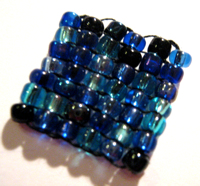
Because it’s not long to Valentine’s Day any more I’d like to offer a template for you to bead a heart with square stitch (for instructions on how to do the square stitch see links below).
It’s great to make a card but can be made into a piece of jewelry as well.


unikatissima Heart Chart Click picture to enlarge and then simply print.


unikatissima Bead Square Stitch And here you can see easily where the name ‘square stitch’ comes from ;-))


Links:
Standard Square Stitch Beading Tutorial
Making Square Stitch Samples Part I – shows also the ‘Circular Flat Square Stitch’

Perlenhobby Anleitungen (German) => click ‘Anleitungen’ in the left navigational bar => click ‘Quadratstich’

Self Coloured Tissue Papers

unikatissima Self Coloured Tissue Papers

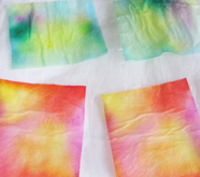
Accidentally I found a way of making beautiful coloured background papers from tissue paper or paper napkins and markers.


That’s what you have to do:
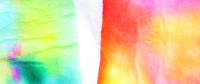
unikatissima Self Coloured Tissue Papers First I cut the tissue paper in pieces of about 6×6 cm (roughly 2,5×2,5 inches).
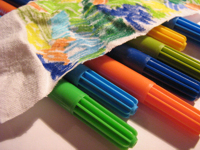
I painted them (through all layers) with colour matching markers.
It doesn’t matter if there are little white areas.


unikatissima Self Coloured Tissue Papers I layed the coloured pieces out on plastic foil (e.g. an unused garbage bag) and moisted them with water.
The water makes the colours bleed wonderfully.
It is best to add the water dropwise, this way you can determine best how much water you add (if it gets too wet, the colours bleeds too much and doesn’t stay on the tissue paper).


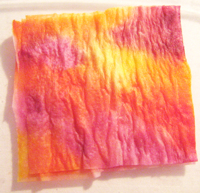
unikatissima Self Coloured Tissue Papers In the end I let dry the coloured squares.
When using them for cardmaking, I mostly only use two or three layers, not all of them.
But you have to try this by yourself.


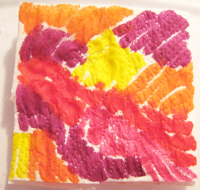
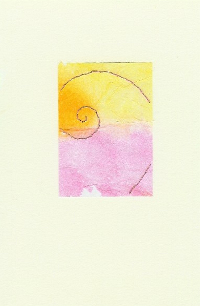
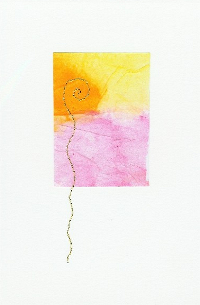
Here I show two hand embroidered postcard sized wallhangings (just like the Paper Crazy Quilt) I worked with self coloured tissue papers. Both tissue papers are layers of the same paper (you can see that they have the same pattern), but the different coloured background papers make them glow differently.
unikatissima Card unikatissima Card


unikatissima Self Coloured Fabric Once I used the same technique on fabric (an old (clean! ;-)) bedsheet) and it worked.
The next time I added too much water and suddenly everything was of the same dull colour. ;-)
I think that this colour can be heat set just as the acryl coloured or the crayon tinted fabric, but I haven’t tried it yet.


Links:
Here at unikatissima:
Paper Crazy Quilt

Acryl Coloured Fabric
Crayon Tinted Fabric

Crazy Daisy Ring

unikatissima Crazy Daisy Ring

After having played around with Crazy Daisies (see links below) I found out that you can make a ring from them very easily.


unikatissima Crazy Daisy Ring You take a Crazy Daisy (instructions see links below) and attach a ring ;-)


unikatissima Crazy Daisy Ring In this case I made and attached a simple, single-coloured Kumihimo strap from the same yarn I used for the Crazy Daisy.
I could have used a simple wire ring, similar to the River Troll Ring, a woven ring, a macramé ring similar to the Beaded Macramé Bracelet, a fingerlooped ring, a crocheted or knitted ring, a simple beaded ring, a Peyote Ring, etc etc etc ;-))


Links:
Here at unikatissima:
Crazy Daisies
Crazy Daisies II
Kumihimo
Fingerloop Braiding

Rings and similar items here at unikatissima:
River Troll Ring
Woven Ring
Beaded Ring
Peyote Ring

Beaded Macramé Bracelet

Actinia

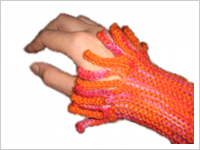
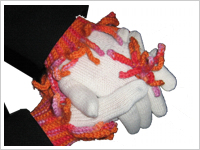
unikatissima Actinia Wristwarmers

Once I saw the Worm Scarf and having read the instruction for the ‘worms’ I thought that you can knit great fringes this way.
I begun with wristwarmers and after having finished them they looked like the sea anemones called Actinia.

Then I was hooked and knitted an Actinia headband, an Actinia ring and an Actinia brooch (see pictures below).
It is soooo much fun ;-)

And for all this items I wrote a tutorial. You can find the link below at the links.


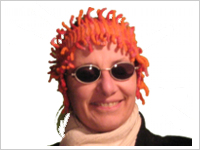
unikatissima Actinia Headband This is the headband.
It is just possible that there are slightly too much fringes!?
;-)


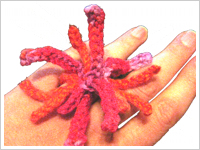
unikatissima Actinia Ring My Actinia ring – cute, isn’t it?


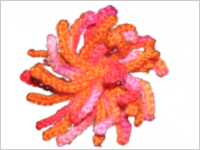
unikatissima Actinia Brooch That is the brooch. It looks great on my black overcoat.


unikatissima Actinia The Actinia wristwarmers and ring can easily be worn over woollen gloves if it’s really cold.


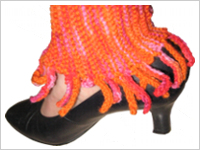
unikatissima Actinia Anklewarmer I haven’t done the Actinia anklewarmer yet, I made the picture with my not yet sewn wristwarmer.
Looks great, doesn’t it?


Links:
unikatissima’s Englisch tutorial for Actinia (PDF – ca. 400 KB)
(with explaining photos)

unikatissima’s German tutorial for Actinia (PDF – ca. 400 KB)
(with explaining photos)

There you find instructions on how to
knit items with fringes,
add knitted fringes to finished items,
knit the wristwarmers,
knit the headband,
knit the ring,
knit the brooch and
knit an I-cord.
I also added ideas for more ways to befringe items.

Worm Scarf

Wikipedia: Sea anemones

Stash scarf

unikatissima Stash Scarf
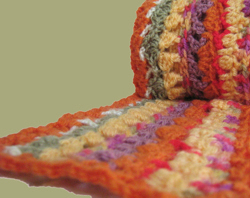
Once I found a great blog entry where somebody showed how she’s working her stash and scrap yarns into a scarf. Unfortunately I don’t find the entry back ;-(

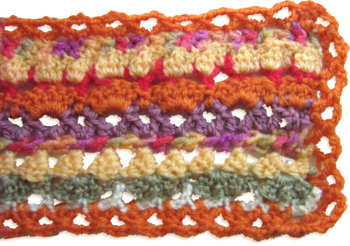
In principle she sorted her stash according to colours (her example was made in blues) and from each yarn she crocheted a long row, every row even in another crochet stitch.
I hope that the photos are a help.


unikatissima Stash Scarf I found the result so stunning that I made a birthday gift for a good friend from it ;-)

By the way, this can surely be done in knitting, too!?


Square ‘n’ Fair – Lacy Crochet Square Margarethe

Square 'n' Fair - Lacy Crochet Square Margarethe

I proudly present my first self designed
Square ‘n’ Fair – Lacy Crochet Square Margarethe (PDF ~705 KB)!

It is a PDF-File that contains the diagram for the crochet square Margarethe that I designed (it is my first! ;-)).
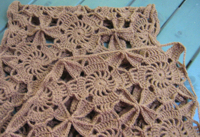
On the photo you see a big scarf I made with this pattern (but I haven’t blocked it yet – it will look much more beautiful then ;-))

I also included several matching diagrams in the PDF-file to this square (‘elements’): a rectangular half square, a triangular half square, a ‘squeezed square’ and two patterns for matching ‘ribbons’.
Additionally I have inserted several ideas on how to combine the different elements and project ideas about what to do with the elements.

Because different terms are used for the same stitches in British and American English, you can find photo and text descriptions of the used stitches in order to easily identify them (not meant as a tutorial).

Best try it yourself:
Use different materials, as e.g. thick wool yarns, middle acryl yarns ;-), fine cotton yarns, embroidery floss, raffia, package string, gift ribbon/gift curling ribbon, yarn made from plastic bags
Make different items, as e.g. sweaters, vests, tops, cardigans, scarves, shawls, headbands, hats, mittens, wristwarmers, skirts, purses, wallets, totes, scrunchies, collars, appliqués, insertions, book or journal covers, tablecloths, place mats, glass coasters, pillows, window or door decorations, bedthrows, ornaments for greeting cards …

If you want to make clothing, check again crochet patterns for/from square medaillons (you won’t need the medaillon patterns this time, but only the women clothing models ;-)) and the basic woman measurement charts for clothing patterns at the website of Jessica Tromp.


Links:
Square ‘n’ Fair – Lacy Crochet Square Margarethe (PDF ~705 KB)

Jessica Tromp:
Crochet patterns for/from square medaillons
Basic woman measurement charts for clothing patterns

At craftster: Curling Ribbon+Crochet Hook=Many Purses

At Marlo’s Crochet Corner: Cutting the plastic bag ‘yarn’

At Craft Chi: Doily Racerback

Here at unikatissima:
Plastic Bag Tote
Clothes From Crocheted Medaillons

Bead Intertwists

creadoo Perlenschlingen-Bead Intertwists

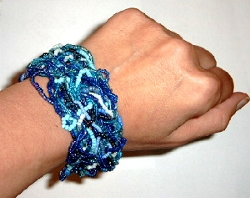
During my ‘beading time’ I wrote a (German) tutorial for bead intertwists as on the photo.


Here is the English translation:
Material:
for the bracelet:

  • selection of beads (here: various seed beads)
  • colour matching thread
  • needle

additional items:

  • pins
  • styrofoam or cork board
 

What to do:
unikatissima Bead Intertwists - Material
First make a selection of beads and place them at your disposal.

Tip: Uniform colouring connects visually; different forms, sizes and transparency makes it more vibrant.

In this example I used eleven different sorts of blue seed beads, some transparent, some with silver lining and some opaque.
More variety in sizes brings more vitality. The border between vitality and disquietness is to your liking.


unikatissima Bead Intertwists - step 1
Thread beads and make a frame of approximately the right size.

Connect the bead strings from time to time to the borders of the frame.


unikatissima Bead Intertwists - step 2
Weave more bead strings into the frame, connect them from time to time to other strings.

Tip: On the photo the inner bead strings are sometimes multi coloured.
During the work I found out, that this isn’t necessary and that one coloured strings mostly look better.


unikatissima Bead Intertwists - step 3
Continue to weave in bead strings: long strings, short strings, lengthwise, crosswise, over and under.

Tip: When the ‘fabric’ gets tighter it’s easier to work in the bead strings in sections.

On the photo I append about half a dozen white beads to a white string.

Pay attention to make a ‘fabric’ of consistent denseness.


unikatissima Bead Intertwists - step 4
When everything is finished attach any closure, e.g. a bead loop and a colour matching button.

I didn’t make any closure, because the item on the photo wasn’t meant to be a bracelet.


Notes:

  • If the bead strings are carefully woven the ‘fabric’ keeps quite good its form.
  • I used simple cotton thread for the example and wove in the ends with some glue. I could do it this way, because the item was intended to be glued onto a sturdy surface and there would be no strains to the threads.
  • At the beginning it can be difficult to keep the form. The styrofoam or cork board can be of great help when pinning the item to the board.

Have fun!


Links:
Bead Intertwists (Perlenschlingen) (German)
Mosaic from Plaster

Mosaic from Plaster

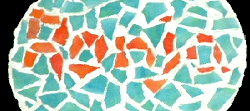
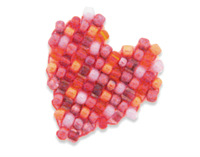
Once I wanted to play a little bit with mosaic for a door board (see photo) but without having to buy all those materials. I didn’t know if I would use them ever more.
Therefore I figured out how to make my own mosaic stones from plaster and wrote a German tutorial.
I’m giving here a translation, see some photos at the German tutorial.

How to make your own mosaic stones:
You need:

  • Plaster
  • (Rectangular) plastic lid
  • Water
  • Brush
  • Paint as used in school
  • Vinegar
  • Finish

What to do:

  1. Make plaster following the instructions and cast a thin layer. The consistency should be yoghurt-like and the layer not thicker than 3mm / 0.07 inches.
    Note: Use the plastic lid of a margarine jar for casting.
  2. After hardening paint the plaster cakes with the paints.
    Note: The cakes must have become hard, but they don’t have to be dry when painting.
  3. After the cakes are dry (about one day) coat with the finish.
  4. Then break the cakes into mosaic stones.
    Note: This can be done in an irregular way, but you can also score the cakes and then break in square or rectangular pieces.
    Note: The scoring of the cakes can best be done when the cakes aren’t dry. Although you can score dry cakes they break more easily than the moist ones.
  5. Now make your mosaic by casting a form with plaster and setting your mosaic stones into the plaster.
    Note: To delay the hardening mix the plaster with some vinegar.
    Note: Only cast plaster in flexible forms because it expands slightly and you won’t be able to release it from a solid form.


Links:
Make your own mosaic stone (German)

Slow down drywall-plaster drying time with vinegar (English)
What to do to delay drying time of plaster? (German)
(Somebody here tried a drop of dish liquid in place of vinegar and said that it worked)

Hiragimi

Hiragimi

Once I found a tutorial on Hiragimi braid, but not only can’t I find it back, while googling for ‘Hiragimi’ I dind’t find anything.
Strange!
But at the tutorial the diagrams weren’t so good, so I sketched the diagrams again for myself.
And so you can download them now from here ;-))

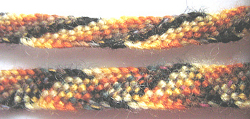
Hiragimi braid is similar to Kumihimo braid, but the braid won’t be round but flat (see photo).
When making my braid I found it most difficult to get the tension right, I always pulled more to one side than the other so that the braid became curved ;-)


Links:
unikatissima’s Hiragimi (PDF, ~460 KB)
The PDF includes a template for a cardboard disk respectively card (at the end of the file) and a description for braiding the pattern that you can see on the photo

unikatissima’s entries:
Kumihimo
Kumihimo Beads
Kumihimo Edo Yatsu

Clothespin bobbins

Nature Paper

Nature Paper

Once I found a tutorial on how to make paper from vegetables, but I don’t find back the tutorial (it was at ARD-Buffet, but it seems to be too long ago).
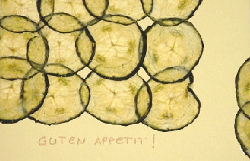
On the photo you see a card made with cucumber paper for a friend for the end of fast.

How to make cucumber paper:

  1. Cut the cucumber in slices of about 0,5 cm / 0,2 inches.
  2. Put the slices between two layers of tissue paper.
    They must overlap to form a sheet of paper!
  3. Put everything into the microwave and put several plates as weight onto your paper-to-be.
  4. Heat at a high temperature for about 1 minute.
    (Note: Please be careful when using the microwave!)
  5. After 1 minute the tissue paper is wet, you have to change it. Also air the cucumber paper a little bit.

Repeat steps 2 – 5 until the tissue paper stays nearly dry.
Lay between new sheets of tissue paper and between several layers of old newspapers and put some weight on it.
About once a day you must replace the moist tissue paper and newspapers by dry ones.
After 2 – 3 days your cucumber paper is ready for use.

Cucumber seems to be one of the easiest vegetables to be used for paper. You can also use other vegetables, but I haven’t tried them and can’t say, how thick the slices must be and how long it takes.
The paper is real paper: You can write on it, you can cut it and so forth.