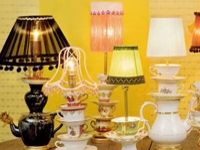
Well, aren’t these lamps great? ;-)
Links:
Recycled Lamps (Sagolikt svängiga lampor) (Swedish)
via: Stimmungsvolles Recycling
…compilation of tutorials
Well, aren’t these lamps great? ;-)
Links:
Recycled Lamps (Sagolikt svängiga lampor) (Swedish)
via: Stimmungsvolles Recycling
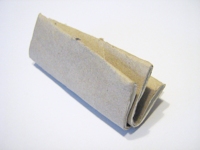
That’s no big deal, but helpful ;-):
To prevent our windows from slamming shut, we latterly fold two toilet paper tubes and squeeze them under the frame.
They have the advantage of not being too rigid and so not break the frame, but they are (although not beautiful) functional ;-))

That’s a brilliant idea: when you knit lace (but not only there) thread from time to time a different coloured, best slick thread through the stitches as lifeline.
If you have to frog, this thread makes sure that the stitches won’t frog further and I think that it should be easier to pick up the stitches, too.
But also, if you loose a stitch, it can’t go further than the lifeline.
I’m amazed! :))
Links:
The Lifeline
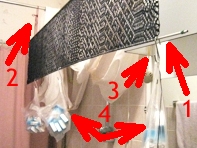
You can find many hints in internet on how to block knitted lace, I wanted to show you how I did.
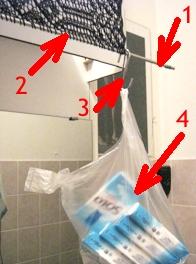
This way both rods are pulled apart and the shawl is blocked.
But the technique isn’t perfect: I’d have needed rods for the short sides of the shawl, too, that should have been attached to the long rods, but I didn’t have the time.
That’s why the short sides of my Advent calendar shawl are slightly worn out, but it’s not soo bad.
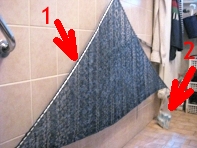
In a similar way you can do this with a triangle shawl: I threaded the same aluminium rods then above (1) through the holes I’ve knitted at the edge.
Then I added an S-hook with the weight in the last hole to really drag the points down.
I soaked everything in water and placed it on the ground.
The weight of the water drags down the center so that I didn’t need any weight there and it didn’t wear out as much as the rectangular shawl.
By the way, I covered the ground with a plastic cover because I didn’t want to wade through puddles ;-)
To see how others block their lace, simply search for blocking knit lace or stricken (spitze OR ajour OR lochmuster) spannen in German (results not so good).
Links:
Google search result for ‘blocking knit lace’
Google search result for ‘stricken (spitze OR ajour OR lochmuster) spannen’
Here at unikatissima:
Advent calendar shawl
Note: After Christmas I will offer it in just one file ;-)

Ok, that’s surely no instruction but a wonderful inspiration: embellish your cupcakes for once with a beautiful border, cut, doodled (like the paper beads), stamped or what ever ;-))
If you want to make such a cupcake wrapper yourself, my online cone calculator could possibly be a help ;-)
Links:
Cupcake Wrappers (Love Story Wedding Cupcake Wrappers)
Here at unikatissima:
Entries with the tag ‘paper cut’
Entries with the tag ‘doodle’
Entries with the tag ‘stamping’
Making Paper Beads
Online Cone Calculator
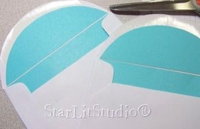
I surely will need the tutorial for lined envelopes one day! ;-)
It must also look great when the envelopes are lined with colourful ads or the like.
Links:
lined envelope tutorial
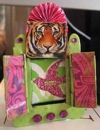
I find as well fabric inchies as well paper inchies beautiful, but I never quite knew what to do with them.
Now I know it: I have to frame them ;-)
They embellish ready bought frames in the instruction, but you can always make your frames yourself ;-)
Links:
Frame Your Inchies
Here at unikatissima:
Fabric Inchie Collage
Serendipity Collage
Entries with the tag ‘photoholder’
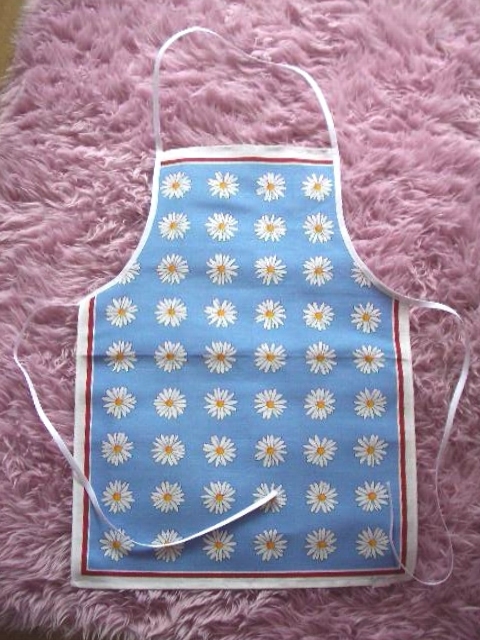
After having published the entry Slippers from Old Textiles, Monika sent me an email with the photo (click to enlarge) and the following text (translation – and translation errors! – by me ;-)):
“I’m making such aprons for years. The ‘edging’ or rather the slings are from ready bought bias tape (the package with 5m lasts conveniently for exactly one apron two aprons, so that also the costs remain reasonable).
The aprons are always a great success. If the pattern makes it possible (e.g. gingham patterns) I sew little pockets from the pieces that I cut away on top.”
Well, isn’t this a great idea?
Thank you, Monika!
And if you have the dish cloth 2x, sew some matching potholders ;-)
Links:
Here at unikatissima:
Slippers from Old Textiles
Sewn Potholders

Packing tape transfers are wonderful ;-)
You can see how it looks e.g. at the flexagons or at my artist book.
In the instruction they are using laser prints that they sell but I’ve made already all sorts of papers (more or less) ‘transparent’: articles from Arabic and Chinese newspapers, pictures from old comic books, patterns from some ads or my beloved travel brochure, pages from old music books or old books written in Fraktur.
Self-printed pictures (I have an inkjet) didn’t work and the quality of my packing tape transfers was differing strongly.
Therefore it’s true again: The proof of the pudding is in the eating ;-))
Links:
Transfers With Packing Tape
Wikipedia entry for ‘Fraktur’ (English)
Wikipedia entry for ‘Fraktur’ (German)
Here at unikatissima:
Flexagons
Artist-Book
Paper Shopping Bag
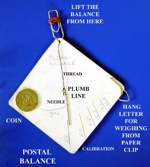
Linking is wonderful: I found a self-made postal scale, inspired by a self-made postal scale, inspired on its part by another self-made postal scale ;-)))
And we have now the chance to choose the self-made postal scale that we like best or where we have the material for at hand ;-))
Links:
DIY Postal Scale (Postal Balance)
via: DIY postal scale
via: Pretty Good Postal Scale from Old CDs
via: A 67 Cent Postal Scale
For Europeans:
Wikipedia entry ‘Euro coins’ (English)
Wikipedia entry ‘Euromünzen’ (German)