Cheese Buttons

instructables Cheese Buttons.jpg

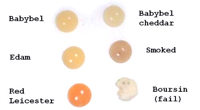
I presented the Galathite (milk stone) already, now i found something similar: cheese buttons.
This way you can skip the preparation of the milk.
In the instruction they compare several sorts of cheeses and try whether the buttons can really be used.

Perhaps I will buy some extra-Edam next time in the supermarket ;-)


Links:
Cheese Buttons (Buttons: an experiment with cheese)

Here at unikatissima: Galathite (milk stone)

1940’s Knitting Patterns

Vintage Purls Cobweb Stole

Isn’t this simply elegant? ;-)

I liked the knitting patterns from the (appr.) 1940’s, it’s such a different style from today.
Anyhow I wont knit none of them – I would never be able to finish one of them ;-))

What I found funny: there is an instruction for a bedsock (search for ‘Spiral Bedsocks’), exactly like the Sock without Heel I presented before.


Links:
1940’s Knitting Patterns (Vintage Purls – Women’s Patterns)

Here at unikatissima: Sock without Heel

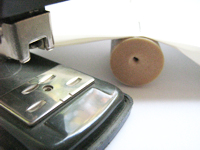
Staple Together Little Notebooks

unikatissima Staple Together Little Notebooks

Another very dear friend sent me the link to the inventive technique on how to staple together little notebooks.

I tried it: It works great! And fast! And neat!
;-)

At any rate it is a really great idea that I’m glad to spread.

Playing cards could well serve as cover here ;-)


Links:
Staple together little notebooks (Tell me if you’ve seen this one before.)

Here at unikatissima:
Accordion-Style Playing Card Notebooks
more entries with the tag ‘books’

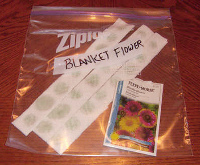
Seed Tapes

instructables Seed Tapes

As said before I’m a city kid and don’t know anything about plants, but I found those seed tapes interesting anyhow: It seems that you only have to put them in the soil and then something happens.
Or something like that ;-))

I’d like to hear if you’ve made your own experiences!


Links:
Make Your Own Seed Tapes

Here at unikatissima:
Seed Starters
Garden Decorations
Jewelry for the Garden

Tie-dye Rice

Sakurako Kitsa Tie-dye Rice

Recently the term ‘Bento‘ (a single-portion meal to take away) came up again and I decided to present today the tutorial on how to make ‘cloudy sky’ rice.

Up until now I have never made such a beautiful meal because it’s much too time-consuming for my liking. Instead I spent hours on looking at photos of Bento’s of other people ;-))

I don’t think that I will make the blue rice because I guess that it wouldn’t look so appetizing when served with green and red pappers and brown fish sticks.
But perhaps in pale yellow? ;-))


Links:
Tie-dye Rice (tutorial- tie-dye/rainbow rice)

Wikipedia entry for ‘Bento’ (English)
Wikipedia entry for ‘Bentō’ (German)

Flickr group ‘bento boxes’
Google image search result for ‘bento boxes’

Origami Photo Frame

unikatissima Origami Photo Frame

A dear friend sent me the link to an Origami instruction for a photo frame.
I’ve seen several before which didn’t really impressed me, but of course I took a look at the tutorial:
I’m amazed!

My friend wrote that you can put a postcard or a 10 x 15 cm photo in a frame made of a A4 paper sheet and that a 7 x 10 cm photo fits in a frame made from a A5 paper sheet.
I find best of all that you adjust the size of your photo frame exactly to your photo in one of the last steps and this way you can even make it fit a not-so-exacltly-cut 10 x 15 cm photo.
What is more the frame is easy to fold.

What more could you ask for? ;-)


unikatissima Origami Photo Frame Here I show the back of the frame.
When folding you create an (amazingly stiff) triangle that serves as frame stand.
Here you can (hopefully) see that the photo frame can only stand if the picture is in landscape format, a portrait formatted picture has to be hung at the wall or put into a photoholder.

First I thought about making the frame from patterned paper but then I found it a little bit silly because you can only see the four corners on the front side.


Links:
Origami Photo Frame (Picture Frame)

Here at unikatissima:
Plaster Photo Holder
more entries with the tag ‘photoholder’

2 Techniques – 1 Cord

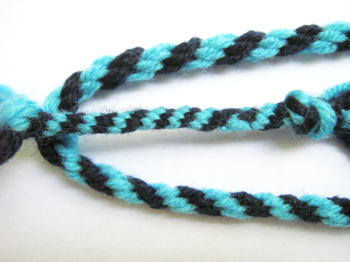
unikatissima Fingerloop Kumihimo Cord

Recently somebody showed me a simple yet beautiful finger loop pattern.
At home I tried it directly again, it is the outer cord (above and below), I braided it first to the left and then to the right.

Then I thought that I worked such a pattern in Kumihimo already, but the one I made worked a little different.
Therefore I transcribed the new finger loop pattern to a Kumihimo pattern (the middle cord on the photo).
The Kumihimo cord became much sturdier because I used quite a heavy weight.

Both are braidung techniques and I reckon that every finger loop pattern can be ‘translated’ to a Kumihimo pattern but surely not the other way round.

Afterwards I did some research and found that ‘my finger loop pattern’ has been described on the pattern page of the Fingerloop Braids Website as ‘A lace bend rounde of 8 bowes — c. 1475’ (viz. it is done with 8 loops in place of 6 loops in my case) – but I never understood the notation ;-))

Here I show you how I made the finger loop cord and the Kumihimo cord, you had perhaps problems with the notation, too ;-)


Finger loop cord

Cut 6 threads of the same length and elasticity and lay them in half to form loops.
Make 3 threads per colour (here dark blue and turquoise).
Knot the open sides together and fix them somewhere to be able to braid with the loops (you can find more detailed instructions in the links of my entry about finger loop).
 

unikatissima Fingerloop Kumihimo Cord
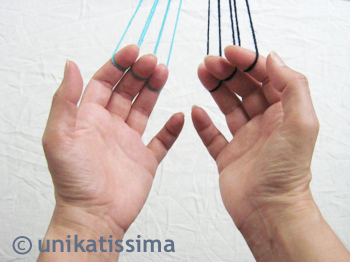
Take the loops of one colour on the index, middle finger and ring finger of one hand and those of the other colour on the corresponding fingers of the left hand.
Here I took the turquoise loops on the left and the dark blue loops on the right hand.
 

unikatissima Fingerloop Kumihimo Cord
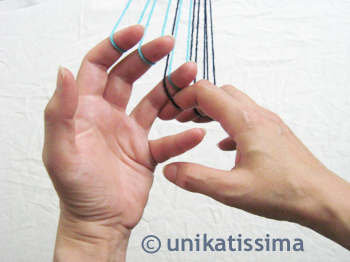
First swap the loops of the right index and the left ring finger.

To do this lay the loop of the right index behind the loop of the left ring finger…
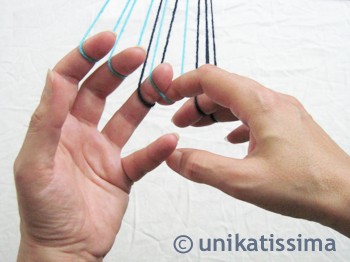
 

unikatissima Fingerloop Kumihimo Cord
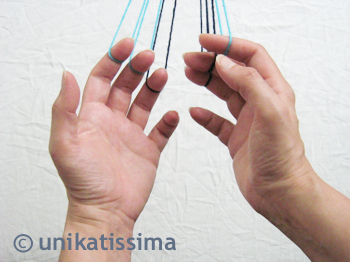
…and take then the loop from the left ring finger on the right index.
 

unikatissima Fingerloop Kumihimo Cord
You have now on the left hand two turquoise loops (on the index and the middlefinger) and a dark blue loop (on the ring finger) and on the right hand one turquoise loop (on the index) and two dark blue loops (on the middle and the ring finger).

Note: I didn’t take a photo of it, but after every swap open your arms wide to tighten the braid and make it sturdier.
 

unikatissima Fingerloop Kumihimo Cord
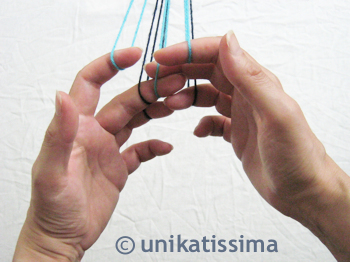
Next swap the loops of both middle fingers in the same way.
 

unikatissima Fingerloop Kumihimo Cord
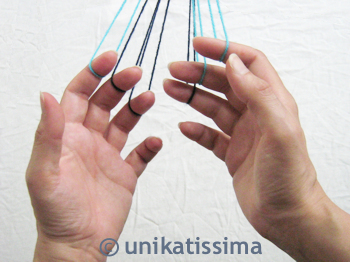
You have now on the left hand one turquoise and two dark blue loops and on the right hand the other way round.
 

unikatissima Fingerloop Kumihimo Cord
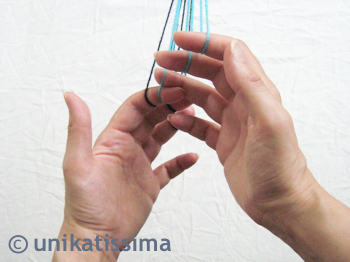
For now the last step is the swap of the loops of the right ring finger and the left index.
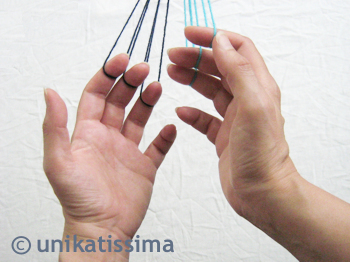
 

unikatissima Fingerloop Kumihimo Cord
Now you have all three turquoise loops on the right hand and the dark blue loops on the left hand.

That’s been the first half of the steps to do.
Repeat all steps (index right-ring finger left-swap, middle finger-swap, ring finger right-index left-swap) to bring back the turquoise loops to the left hand and the dark blue loops to the right hand, then you have braid a full round.

Repeat the steps until your cord is of desired length.


Kumihimo cord

Cut here too threads of the same length and elasticity, but this time cut 6 threads of one colour (here turquoise) and 6 in another (here dark blue).
I made the cord on my cardboard marudai, but it was no fun at all because you have to re-lay the threads for this pattern to their appropriate places at every braid.
At least by now is the moment to ‘construct’ a marudai (links to self-made marudai in my Kumihimo entry).
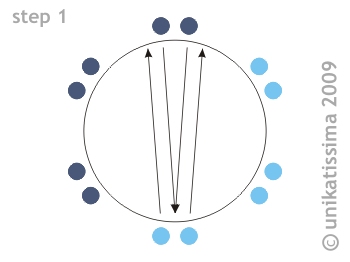
 

unikatissima Fingerloop Kumihimo Cord
Sort your threads as shown in the graphic.
Lay the upper dark blue thread pair between the threads of the lower turquoise thread pair and then lay both turquoise threads where the dark blue ones have been.
Push together the thread pairs to clearly separate them from each other.
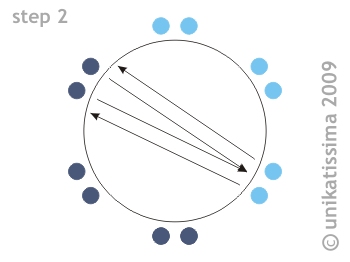
 

unikatissima Fingerloop Kumihimo Cord
In the second step you do the same with the dark blue thread pair top left and the turquoise thread pair down right.
Here again push together the thread pairs neatly.
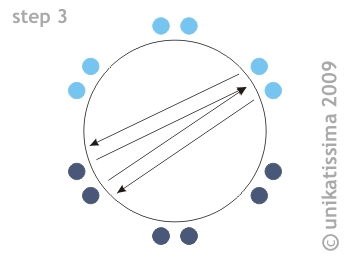
 

unikatissima Fingerloop Kumihimo Cord
In the third step you do the same with the dark blue thread pair down left and the turquoise thread pair top right.

That was the first half of the steps and here, too, the steps must be repeated to get back to the original colour distribution:
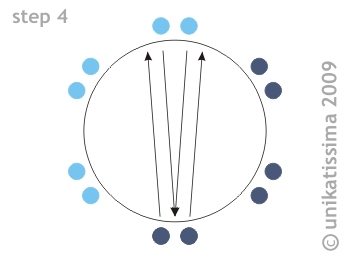
 

unikatissima Fingerloop Kumihimo Cord
Lay the upper turquoise thread pair between the threads of the lower dark blue thread pair and then lay both dark blue threads where the turquoise ones have been.
Always push together the thread pairs neatly.
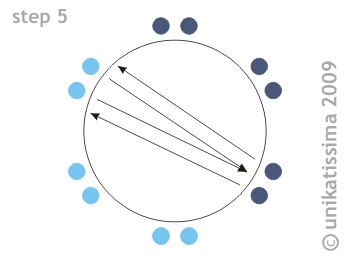
 

unikatissima Fingerloop Kumihimo Cord
In the fifth step do the same with the turquoise thread pair top left and the dark blue thread pair down right.
Here again push together the thread pairs neatly.
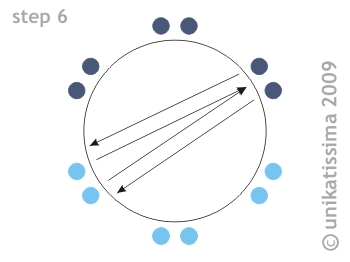
 

unikatissima Fingerloop Kumihimo Cord
In the last step of this round you do the same with the turquoise thread pair down left and the dark blue thread pair top right.
As always push together the thread pairs neatly.

You have finished the first round now, repeat all six steps until your cord has the desired length.

Have fun with the comparison of the two techniques finger loop and Kumihimo and make some beautiful cords :)


Links:
Marca brandenburgensis anno domini 1260 – that’s where the woman came from who showed me the pattern

Fingerloop Braids Website: Fingerloop Braid Patterns
and there:
the finger loop pattern that I presented here, but with 8 loops (‘A lace bend rounde of 8 bowes — c. 1475’)

Here at unikatissima:
Finger loop
for more detailed instructions see there the links

Kumihimo
   for the construction of a self-made marudai see there the links
   my template for a cardboard marudai

On this page:
Instruction for finger loop cord
Instruction for Kumihimo cord
Flower Flap Box

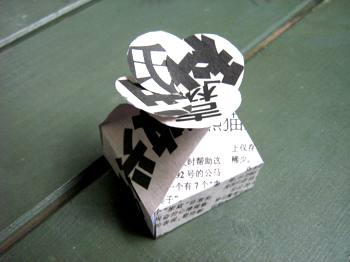
unikatissima Flower Flap Box

I saw somewhere (unfortunately I don’t remember where) such a box, but it was flat while I wanted the actual box (not the flaps) to be of about 2 cm height.
So I made me a template myself ;-))


And that’s what you do:
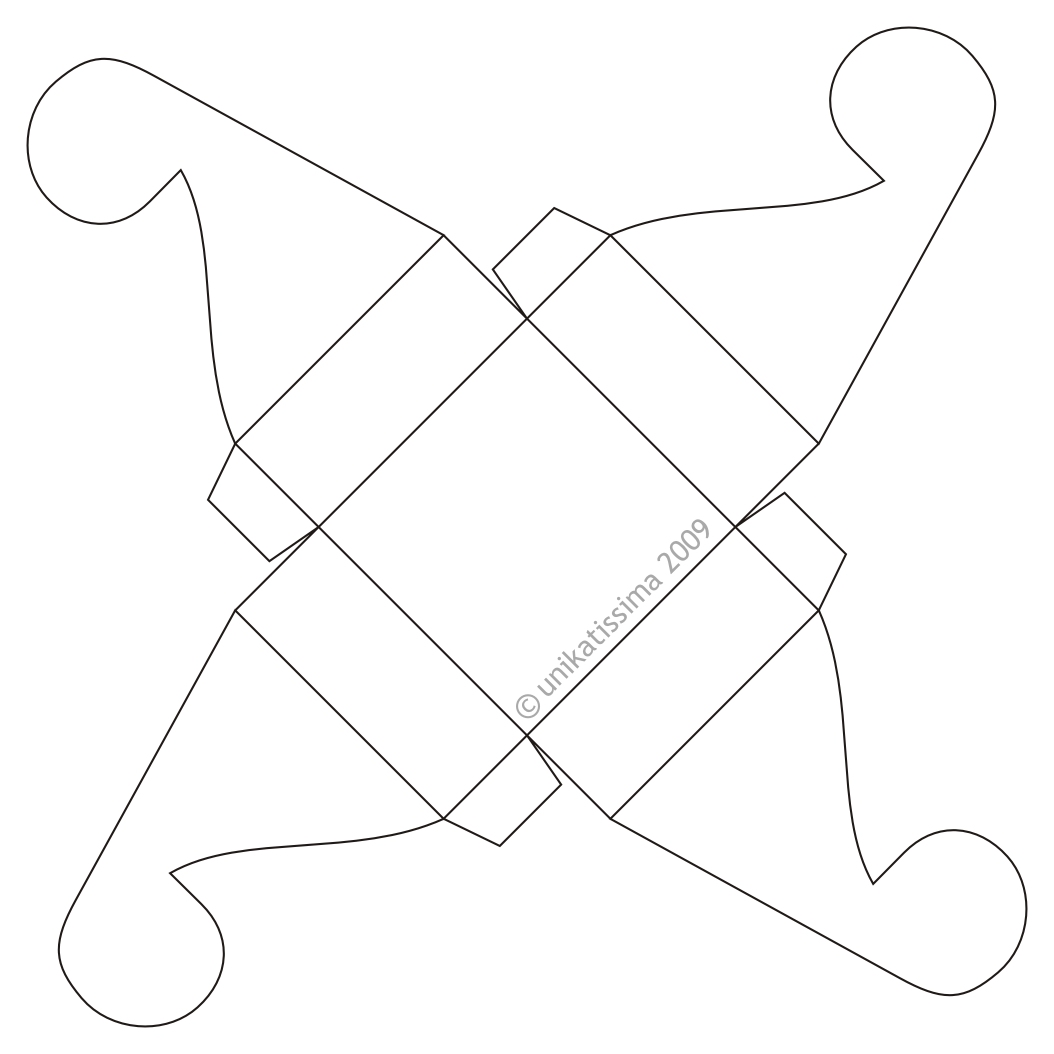
unikatissima Flower Flap Box Template (Click to enlarge)
That is the template.


Instruction for first box: Pasted paper


unikatissima Flower Flap Box
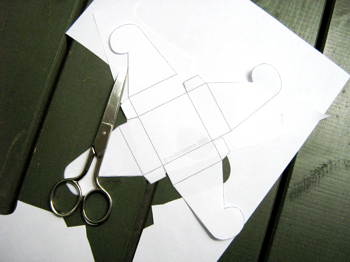
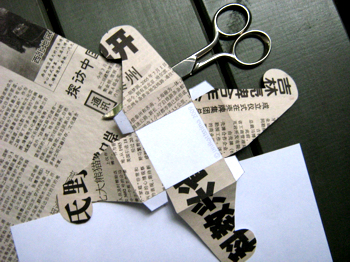
First print the template and cut it.


unikatissima Flower Flap Box
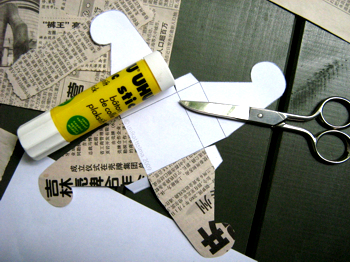
I wanted to have a Chinese box so I pasted the outside up with some Chinese newspapers that I stained with tea before (see links below).
Of course you can paste the paper up with gift wrapping, snippets from ads and so on, too.
I suggest to paste a second layer on the paper in any case to get it sturdier or to use thin cardboard.


unikatissima Flower Flap Box
When having pasted up all four flaps you can pre-fold the box. This way it will be easier to glue the tags.


unikatissima Flower Flap Box
Here is the glue setting.
You can see that I didn’t paste up the inside.


unikatissima Flower Flap Box
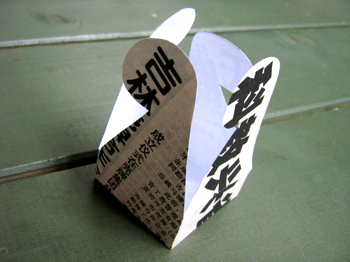
And that is the box in its full beauty ;-)
I suggest to let the glue set well because there will be some strain when you close the box and the tags can get unfixed.

Instruction for second box: Thin cardboard


unikatissima Flower Flap Box
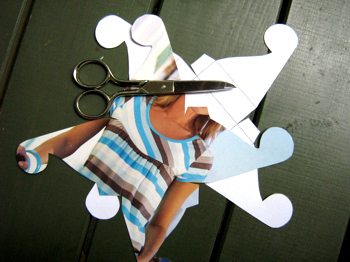
After the first box I felt like making a box from thin cardboard.
The cardboard is from the wrapping of a pair of trousers I bought and I liked the colours of the printed picture.
So I put my printed and cut template on the cardboard, copied it and cut the cardboard along the lines.


unikatissima Flower Flap Box
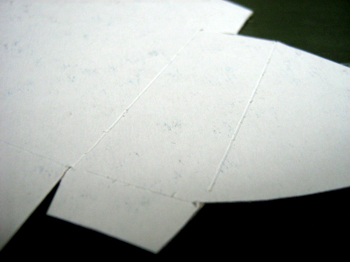
I pre-folded the folding lines to get better folds.


unikatissima Flower Flap Box
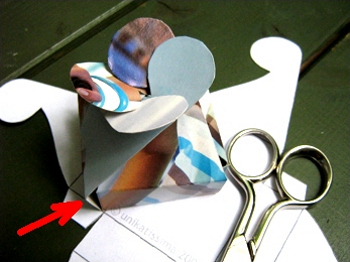
Then I simply folded the box without glueing the tags.
The red arrow shows that there originates a gap.
Depending on what you want you can leave the box at that, the tags make sure that in spite of the gaps nothing will drop ;-)


unikatissima Flower Flap Box
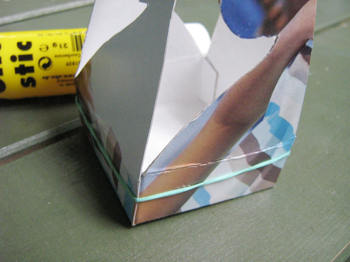
Here I glue the tags to see what happens.
The box always got apart until I fastened it with an elastic.
The glue could set this way better.


unikatissima Flower Flap Box
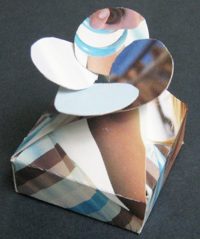
And that is my second little box.
You can see at the edges that it is a properly closed box now ;-)


Links:
Here on this site:
Instruction for first box: Pasted paper
Instruction for second box: Thin cardboard
Template to print

Stain paper with tea
Tea Staining Your Art Journal Pages
Tea Stain Paper

Cross Stitch Patterns Treasures

myauntsattic Cross Stitch Patterns

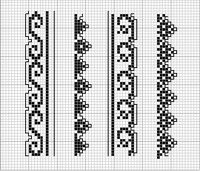
I found a blog where the author fetched the cross stitch patterns of an old aunt from the attic and published them.
I saw beautiful patterns thereby and it’s not as if you had to work cross stitch only with the patterns ;-)

The blog is written in Netherlands and English (the italic text), but the patterns can be recognized anyhow ;-))


Links:
Cross Stitch Patterns Treasures (Tantes zolder) (Netherlands and English)

Here at unikatissima:
What Can You Do With Filet Crochet/Cross Stitch Embroidery Charts?